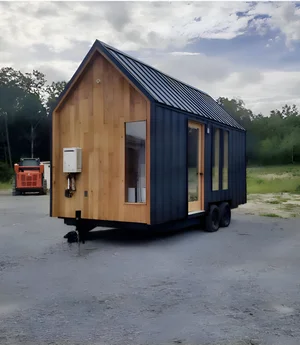
Zoning, Permitting, and Where You Can Legally Live Tiny
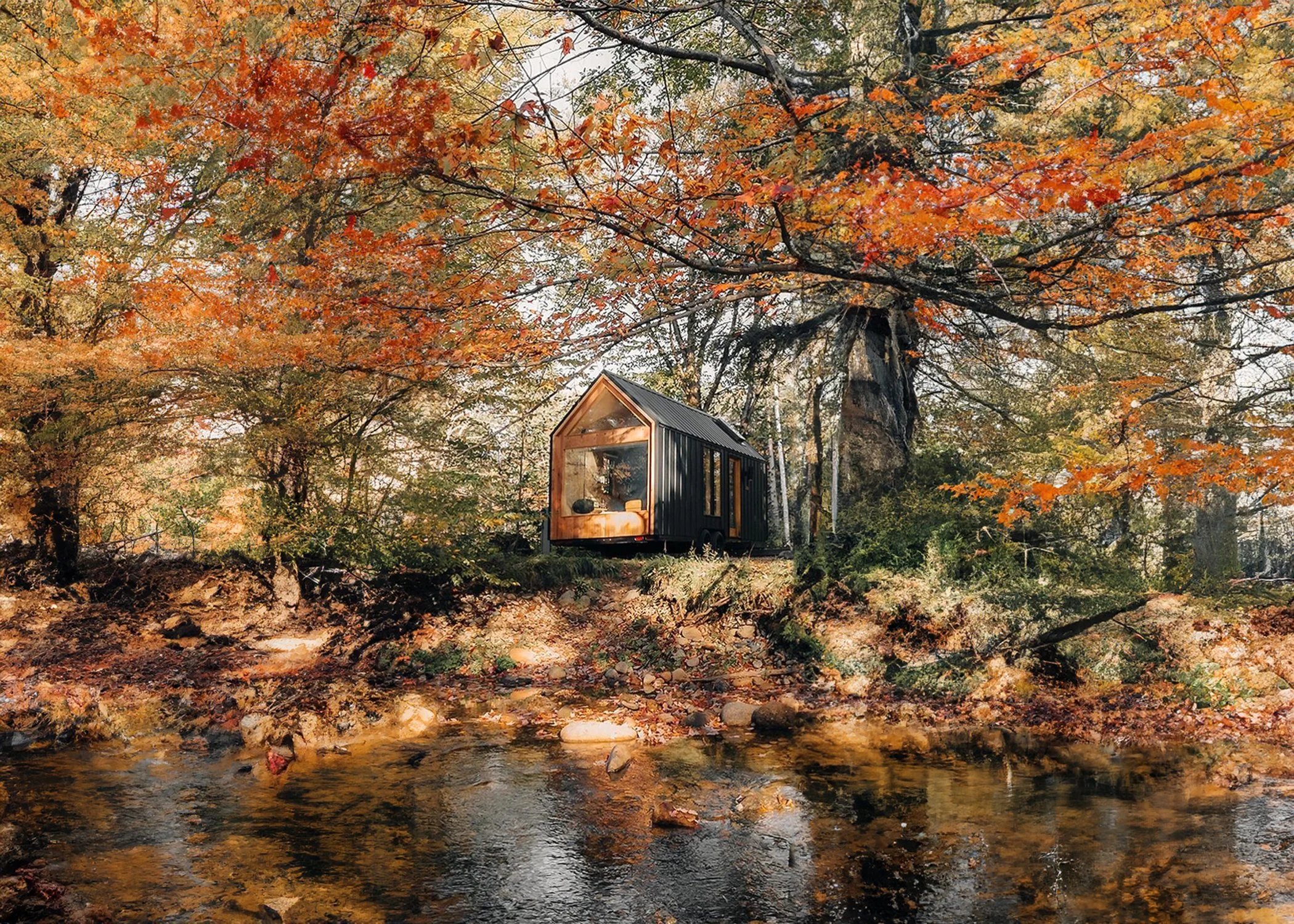
Nordic and Spruce Weekender. Lumen Stays, New Hampshire.
Freedom Begins with Understanding
Tiny homes represent freedom, simplicity, and a more intentional way of living. But before you place one on your property, it’s essential to understand how zoning and permitting work. The rules can change from one county to another, and being informed helps you live tiny the right way.
At Nordic and Spruce we build homes that meet national safety and construction standards as certified PMRVs, (Park Model Recreational Vehicles). That certification matters. It provides a clear legal framework for how and where our homes can be placed, registered, and used.
1. What Is a PMRV?
A PMRV, or Park Model Recreational Vehicle, is a type of small dwelling built under the ANSI A119.5 standard. It is designed to serve as a seasonal or recreational residence, similar to an RV, but often with higher quality construction and residential style finishes to be more suitable for longer term use.
Every Nordic and Spruce home is NOAH-certified as a PMRV, which means it has undergone third party inspection covering structure, electrical, plumbing, and safety. That certification gives both buyers and local officials peace of mind that each home is built to recognized national standards.
2. How Zoning Affects Where You Can Live Tiny
Zoning laws control how land can be used, residential, agricultural, or commercial, and what types of structures can be placed on it. Because PMRVs are technically recreational vehicles, they can often be parked anywhere RVs are allowed, including:
RV parks and campgrounds
Private properties that permit RV-style dwellings
Agricultural or rural land with flexible local codes
Tiny home or park model communities
In many areas, a PMRV can also serve as a guest house, short-term rental, or retreat unit. Permanent full time residence depends on local regulations. Some counties allow it, while others require permanent foundations or specific zoning changes.
The best approach is to contact your local zoning or planning office. Ask them three clear questions:
Are PMRVs allowed on private property in this area?
Can they be used for full time living or only seasonal occupancy?
What utility or septic connections are required?
3. Why Certification Makes a Difference
Certification is what separates a Nordic and Spruce home from unregulated builds. Our PMRV certification through NOAHcertified ensures that your home includes:
Verified framing and structural integrity
Professionally inspected electrical and plumbing systems
Documentation that aligns with national RV standards
When you show this certification to local zoning officials, it demonstrates that your home is built responsibly and meets the same inspection level as any other approved recreational dwelling. That can make the approval process smoother and faster.
4. Permitting and Registration
In many cases, PMRVs can be registered with the state as recreational vehicles, which allows owners to move them legally on public roads and park them in RV approved areas. However, these homes are better suited in semi permanent installations.
Nordic and Spruce provides customers with full documentation, including certification details, and floor plans. This makes it easier to work with local officials and secure the proper approvals for your specific location.
5. Where PMRVs Are Commonly Accepted
Tiny homes and PMRVs are gaining ground in many parts of the country. Areas that tend to be most flexible include:
-
Alabama
General Status: Friendly toward RV and PMRV living in most unincorporated counties.
Common Placement Paths: RV parks, private land, and rural homesteads.Arizona
General Status: Generally favorable with many RV friendly regions.
Common Placement Paths: RV parks, private rural land that allows RV dwellings.Arkansas
General Status: Welcoming in rural areas with limited zoning oversight.
Common Placement Paths: RV parks, private property, and farmland parcels where RVs are permitted.California
General Status: Strong for foundation ADUs, moderate for PMRVs.
Common Placement Paths: RV parks and private property where local RV use is allowed.Florida
General Status: Very open to park model living with many RV-friendly areas.
Common Placement Paths: RV resorts, park model communities, private property where allowed by county.Illinois
General Status: Mixed acceptance. Some rural counties permit RV living, while cities tend to restrict it.
Common Placement Paths: RV parks, rural land outside incorporated zones, and private camp-style properties.Indiana
General Status: Generally open in rural and unincorporated counties. Local restrictions apply in cities.
Common Placement Paths: Private rural property, RV parks, agricultural land that allows RVs or park models.Iowa
General Status: Flexible in agricultural areas, more restricted inside city limits.
Common Placement Paths: RV parks, farmland parcels that allow seasonal RV use, and private retreats.Kansas
General Status: Varies heavily by county but generally open in rural zones.
Common Placement Paths: RV parks, private land in unincorporated areas, and agricultural properties.Kentucky
General Status: Often flexible in rural and agricultural areas.
Common Placement Paths: RV parks, private land with county approval, and farm parcels.Louisiana
General Status: Moderate acceptance, with rural parishes often allowing RV-style living.
Common Placement Paths: RV parks, private rural land, and coastal resort communities.Maine
General Status: One of the most tiny home friendly states. PMRVs recognized at the state level.
Common Placement Paths: Private property where towns allow, or RV and park model communities.Michigan
General Status: Moderate acceptance in rural and recreational regions.
Common Placement Paths: RV parks, lakefront lots, and private property where zoning allows RVs.Minnesota
General Status: Moderate to open, especially in rural or lake areas.
Common Placement Paths: RV parks, private land, and seasonal recreational communities.Mississippi
General Status: Generally open in rural counties with minimal zoning.
Common Placement Paths: RV parks, agricultural properties, and private parcels outside city limits.Missouri
General Status: Fairly open in rural areas with relaxed zoning.
Common Placement Paths: RV parks, private country land, and small communities with flexible rules.Montana
General Status: Moderately open, especially in rural counties with less restrictive zoning.
Common Placement Paths: RV parks, large private parcels, and mountain or lake communities that allow park models.Nebraska
General Status: Mixed acceptance. Many rural counties allow RV or park model placement.
Common Placement Paths: RV parks and private rural land with septic and utility access.Nevada
General Status: Open in many rural and resort areas.
Common Placement Paths: RV parks, private desert parcels, and resort communities.New Hampshire
General Status: Generally cautious but allows PMRVs in some rural and seasonal zones.
Common Placement Paths: RV parks, private wooded parcels, and recreational lots.New Mexico
General Status: Many rural areas are open to PMRVs.
Common Placement Paths: Private rural parcels, RV parks, and off-grid communities.North Carolina
General Status: Growing acceptance in select counties, especially rural ones.
Common Placement Paths: RV parks, rural property that allows RVs, and park model communities.North Dakota
General Status: Mixed acceptance, more favorable in rural counties.
Common Placement Paths: RV parks and private agricultural parcels.Ohio
General Status: Mixed but improving, especially outside urban centers.
Common Placement Paths: RV parks, rural lots that allow RV use, and unincorporated properties.Oklahoma
General Status: Generally open in rural and unincorporated areas.
Common Placement Paths: Private rural property that allows RVs, RV parks, and agricultural land.Oregon
General Status: Supportive of small living but locally controlled.
Common Placement Paths: RV parks, accessory dwelling unit (ADU) lots, and park model communities.Pennsylvania
General Status: Mixed acceptance, varies heavily by township.
Common Placement Paths: RV parks, rural farmland parcels, and private wooded land.South Dakota
General Status: Quite open to park model living in most rural counties.
Common Placement Paths: RV parks, private land, and agricultural parcels with proper septic and utility setup.Tennessee
General Status: Often flexible in rural counties and unincorporated areas.
Common Placement Paths: Private rural land that allows RVs, RV parks, and developing tiny home communities.Texas
General Status: Flexible in most rural and unincorporated counties.
Common Placement Paths: RV parks, private rural land that allows RVs, tiny home or park model communities.Utah
General Status: Partial acceptance, depends on county.
Common Placement Paths: Seasonal RV parks, rural land with RV permissions.Virginia
General Status: Mixed but improving, especially in western and rural regions.
Common Placement Paths: RV parks, agricultural land, and unincorporated parcels.Wisconsin
General Status: Mixed acceptance, better in northern and rural counties.
Common Placement Paths: Seasonal RV parks, private wooded properties, and recreation-focused communities.Wyoming
General Status: Typically friendly toward RV and PMRV living in unincorporated areas.
Common Placement Paths: RV parks, ranch properties, and rural land with flexible residential zoning.
Rules differ by city and county, so always confirm the specifics of your property before purchase or delivery.
6. Building Right Means Living Free
At Nordic and Spruce we believe freedom and responsibility go hand in hand. Our goal is to build homes that are strong, certified, and ready to meet the standards that protect both you and your community.
Living tiny works best when it’s done with clarity and respect for the land and the law. With a certified PMRV, you can move forward with confidence knowing your home meets national requirements and carries documentation that holds up anywhere.
In Short
Zoning and permitting may seem complicated, but they are simply the framework that keeps tiny living sustainable. Nordic and Spruce builds certified PMRVs that give you legal recognition, quality assurance, and flexibility in where you live.
Do the research. Know your local codes. Then live small, live free, and live well.
-Jeff, Nordic and Spruce